
Hidden beside West Lake, behind an impressive temple gate, stands a guardian of ancient Hanoi. Inside, a nearly four-tonne bronze statue has watched over the city for centuries. This is Quán Thánh Temple, one of the Four Sacred Temples of old Thăng Long — and one of the most fascinating historical stops around West Lake.
About Quán Thánh Temple Hanoi
Quán Thánh Temple, also known as Trấn Vũ Temple, stands beside Trúc Bạch Lake, close to West Lake and Thanh Niên Road. Its history is traditionally traced to the reign of King Lý Thái Tổ in the 11th century, when Thăng Long became Vietnam's capital. The temple was built to honour Huyền Thiên Trấn Vũ, a Taoist deity associated with protecting the north — a role that gave it a place among the Thăng Long Tứ Trấn, the Four Sacred Temples believed to guard the ancient capital from its four directions.
Today it remains an active place of worship. Step through its entrance and you'll find a quieter world of incense, carved wood, traditional architecture and centuries-old religious traditions.
Explore the Architecture of Quán Thánh Temple
The temple gate and courtyard
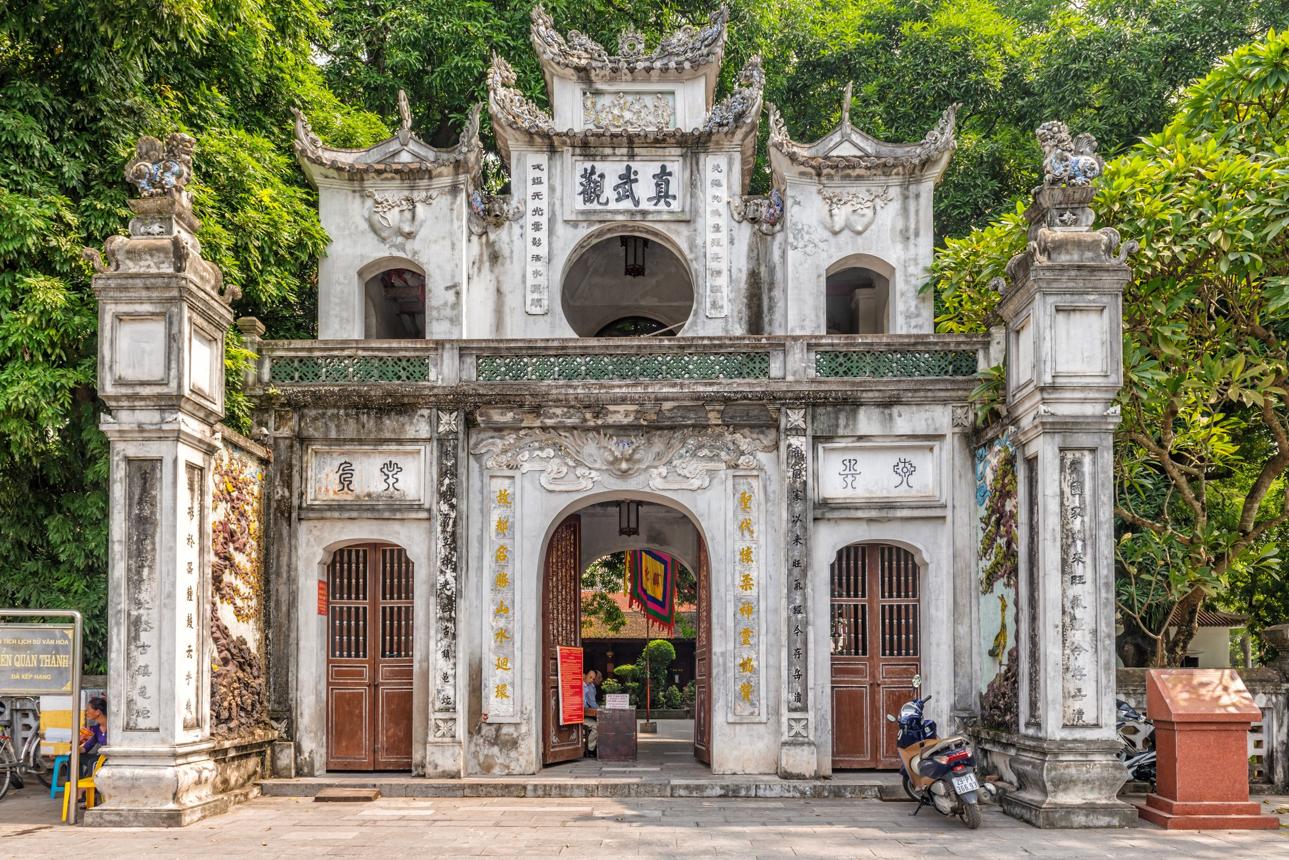
Pass through the traditional gate and the busy streets begin to feel further away. The courtyard creates a transition between the outside world and the temple's spiritual heart — look closely at the decorative details, rooflines and carved features rather than rushing straight towards the main hall.
The main sanctuary
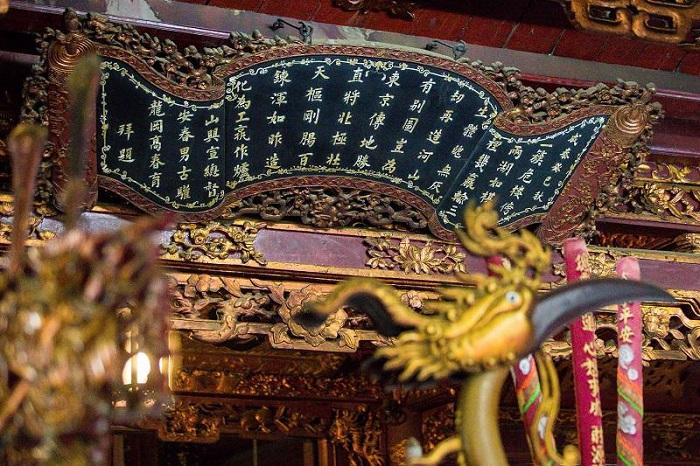
Inside the main sanctuary, dark wooden structures, religious decorations and the scent of incense frame the temple's central place of worship, where visitors pay their respects to Huyền Thiên Trấn Vũ.
The bronze statue of Huyền Thiên Trấn Vũ
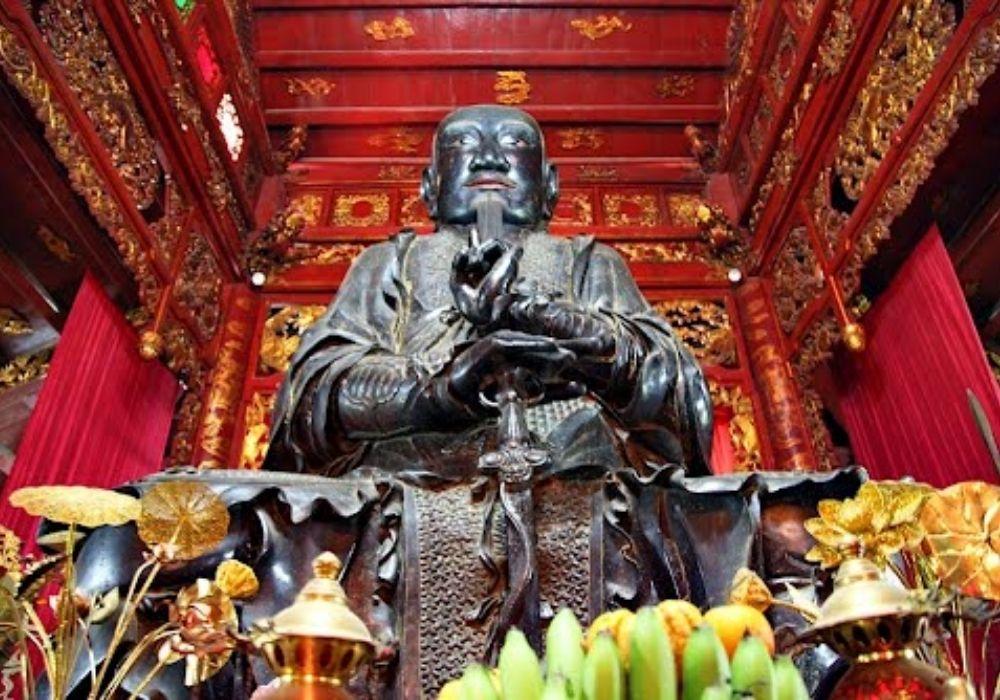
This is the centrepiece. Cast in 1677, the black bronze statue stands approximately 3.7 metres tall and weighs around four tonnes, depicting Huyền Thiên Trấn Vũ holding a sword, with a snake and turtle at his feet. It's a remarkable example of Vietnamese bronze casting — created centuries before modern machinery.
Your Guide to Visiting Quán Thánh Temple
You don't need an entire day to visit — allow around 20 to 30 minutes to explore, with extra time to appreciate the surroundings.
When is the best time to visit?
Go early in the morning for a quieter visit. The 1st and 15th days of the lunar month can be busier as local people visit to pray — choose one of those days for an active period of worship, or an ordinary morning for a more peaceful atmosphere. Spring and autumn are generally comfortable seasons.
How to get to Quán Thánh Temple
- From Hanoi Old Quarter — take a taxi or Grab, or walk if you want to explore along the way.
- From West Lake — an easy stop when exploring the southern and eastern sides of the lake.
- From Trấn Quốc Pagoda — combine both landmarks and follow Thanh Niên Road between visits.
- By bicycle — include the temple in a wider West Lake cycling trip, but watch for traffic.
Search for Đền Quán Thánh on your map to find the entrance.
Entrance fee and opening hours
The published adult entrance fee is 10,000 VND. Regular visiting hours are commonly listed as 8:00 AM to 5:00 PM daily, with longer hours sometimes reported on the 1st and 15th days of the lunar month. Opening arrangements can change during holidays, so check locally before setting off.
What should you wear?
Quán Thánh is an active religious site, so dress respectfully — cover your shoulders and knees, keep your voice low and avoid disturbing people who are praying. Ask before photographing worshippers and be discreet inside the main sanctuary.
What to See Near Quán Thánh Temple
- Trấn Quốc Pagoda — another important religious landmark beside West Lake. Read our Trấn Quốc Pagoda guide →
- Trúc Bạch Lake — a quieter corner of Hanoi for a lakeside walk.
- Thanh Niên Road — the views between West Lake and Trúc Bạch Lake.
- West Lake cafés — find somewhere for Vietnamese coffee →
You can easily combine Quán Thánh Temple and Trấn Quốc Pagoda in the same morning, then finish with coffee or lunch around Tây Hồ.
Frequently Asked Questions
Where is Quán Thánh Temple in Hanoi?
It's beside Thanh Niên Road, near Trúc Bạch Lake and West Lake, in the Ba Đình area of Hanoi.
How old is Quán Thánh Temple?
Its origins are traditionally traced to the 11th century, during the reign of King Lý Thái Tổ, with renovations over the centuries.
What is Quán Thánh Temple famous for?
It's best known as the northern guardian temple of ancient Thăng Long and for its enormous bronze statue of Huyền Thiên Trấn Vũ, cast in 1677.
Is there an entrance fee?
The published adult entrance fee is 10,000 VND — check the ticket counter for current prices.
How long should I spend at Quán Thánh Temple?
Allow around 20 to 30 minutes for the temple itself, and more if combining with Trúc Bạch Lake, West Lake or nearby landmarks.
Can I visit Quán Thánh Temple and Trấn Quốc Pagoda on the same day?
Absolutely — they're close enough to combine in one outing, making a natural pairing for anyone exploring West Lake.
Discover another side of Hanoi
Quán Thánh Temple offers a glimpse into the beliefs, craftsmanship and history that helped shape the old capital. And if you need a welcoming place to return to after a day of discovering Hanoi, Tuna Homestay in Tây Hồ is close to West Lake and away from the busiest parts of the city.
Best rates when you book direct on our website.