
Imagine standing beside a lake in the middle of a busy capital city. Motorbikes hum in the distance, the water moves gently against the shore, and a few people stop to admire a striking red tower rising above the trees.
Then you cross a short causeway, the noise of the city fades, and you're standing at the entrance to one of Hanoi's most historic Buddhist temples — welcome to Trấn Quốc Pagoda. Set on a small peninsula extending into West Lake, this remarkable place has a history stretching back approximately 1,500 years.
Whether you're interested in history, architecture, spirituality or simply discovering a quieter side of Hanoi, Trấn Quốc Pagoda deserves a place on your itinerary — and we'll show you how to make the most of your visit.
Where Is Trấn Quốc Pagoda in Hanoi?
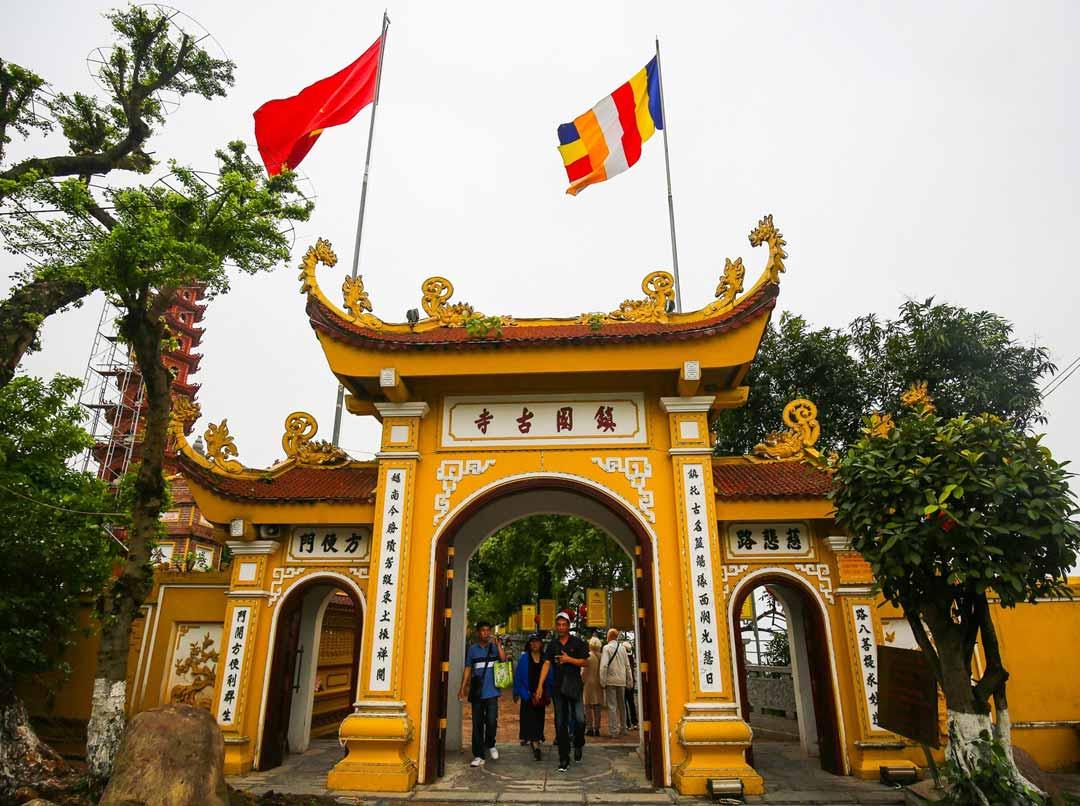
Trấn Quốc Pagoda is located on a small island along the southeastern side of West Lake (Hồ Tây), connected to the mainland by a short causeway on Thanh Niên Street. The temple sits in Tây Hồ, surrounded by water, residential streets, cafés and other historic landmarks.
It's a particularly convenient stop if you're already exploring West Lake — you can combine your visit with a walk along Thanh Niên Street, a stop at nearby Quán Thánh Temple or a relaxed afternoon in the cafés around Tây Hồ.
Local tip: don't just arrive, take a photograph and leave — the surrounding area is worth exploring too. Give yourself time to enjoy the lake and the neighbourhood around it.
The History of Trấn Quốc Pagoda
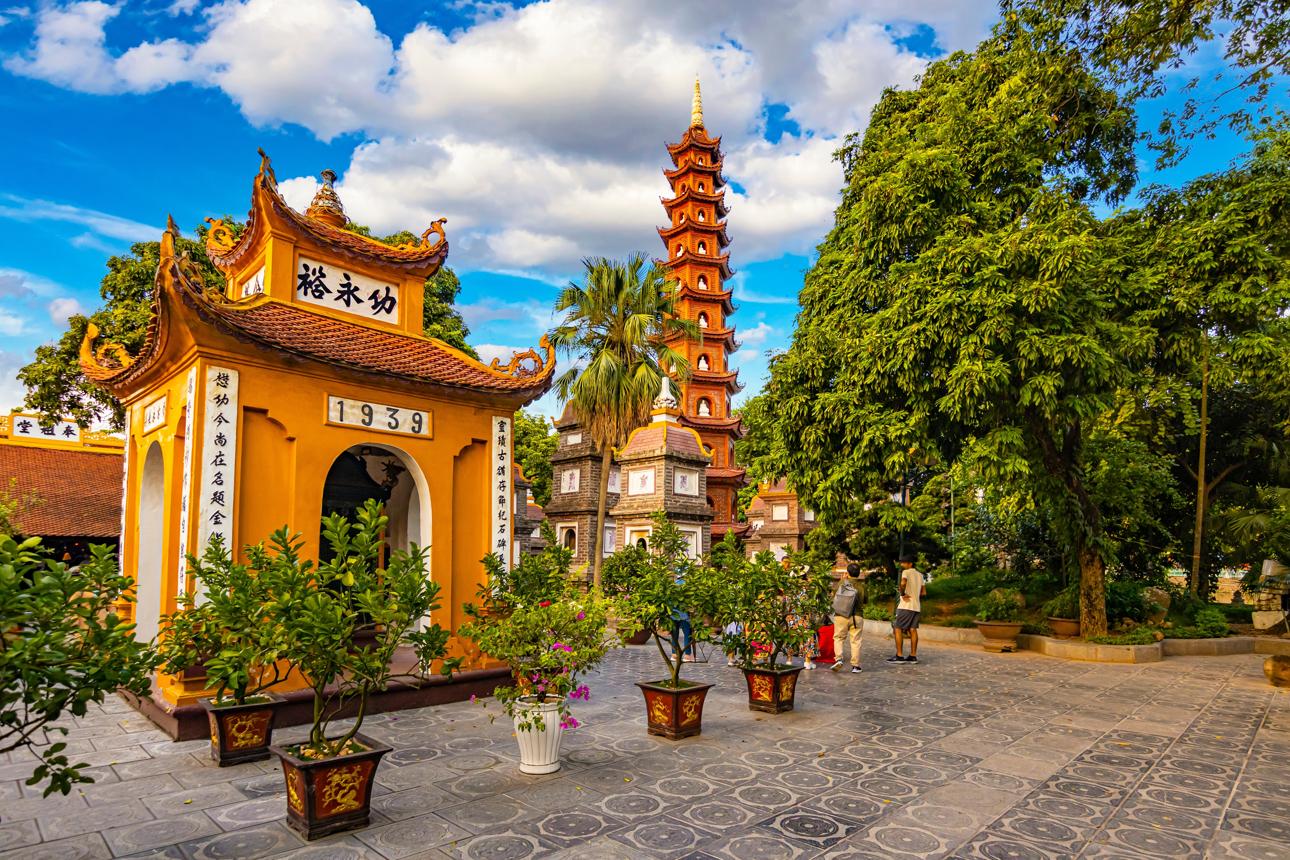
A temple with nearly 1,500 years of history
Trấn Quốc Pagoda's story begins in the sixth century, during the reign of Emperor Lý Nam Đế — traditionally dated to around 541 AD. Dynasties rose and fell, the city changed around it, and generations of worshippers came and went, yet this Buddhist site continued to hold an important place in Hanoi's spiritual and cultural life.
Originally the pagoda was built near the Red River. Over time, changes to the riverbank created the need to relocate it, and in 1615 the temple was moved to its current location on a small island in West Lake — a setting that has become one of its defining features.
From an ancient temple to a symbol of Hanoi
Over the centuries, Trấn Quốc Pagoda developed into an important centre of Buddhist worship, visited by generations of Vietnamese people and attracting royal attention throughout its history. Today it remains an active religious site — you will see people visiting to pray, make offerings and pay their respects. You're not walking through an abandoned monument, but a place that still means something to the people who come here.
Trấn Quốc Pagoda Architecture
At first glance, the most striking feature is the tall red tower rising above the temple grounds — but the courtyards, Buddhist imagery and surrounding landscape all contribute to the character of the complex.
The iconic Bảo Tháp tower
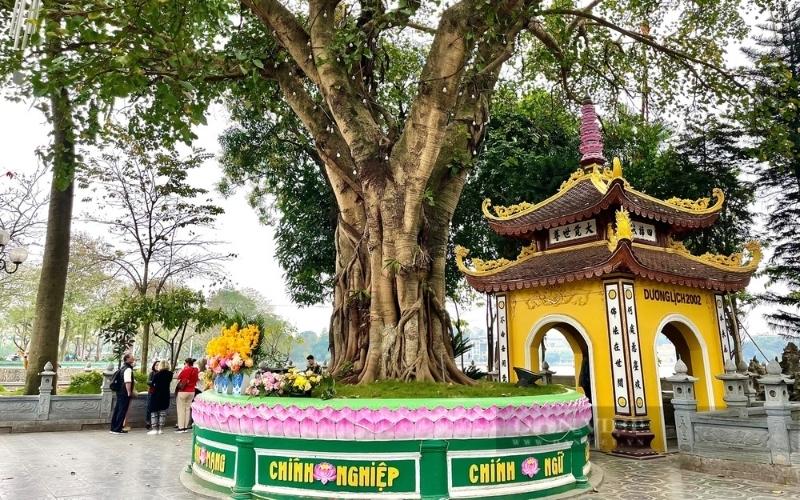
The red tower, known as Bảo Tháp, is probably the feature you've seen in photographs. It stands roughly 15 metres tall with eleven levels and decorative Buddha figures incorporated into its design. Here's an interesting detail: despite the temple's ancient history, the tower itself was completed in 1998. The pagoda dates back to the sixth century, but the tower that dominates so many photographs is a much more recent addition.
Traditional Buddhist architecture and sacred spaces
Beyond the tower, the complex contains traditional Buddhist structures, worship halls, courtyards and statues. Notice the traditional rooflines, carved elements, Buddhist figures and altars arranged throughout the grounds — they reflect the religious purpose of the complex, not just decoration.
The Bodhi tree
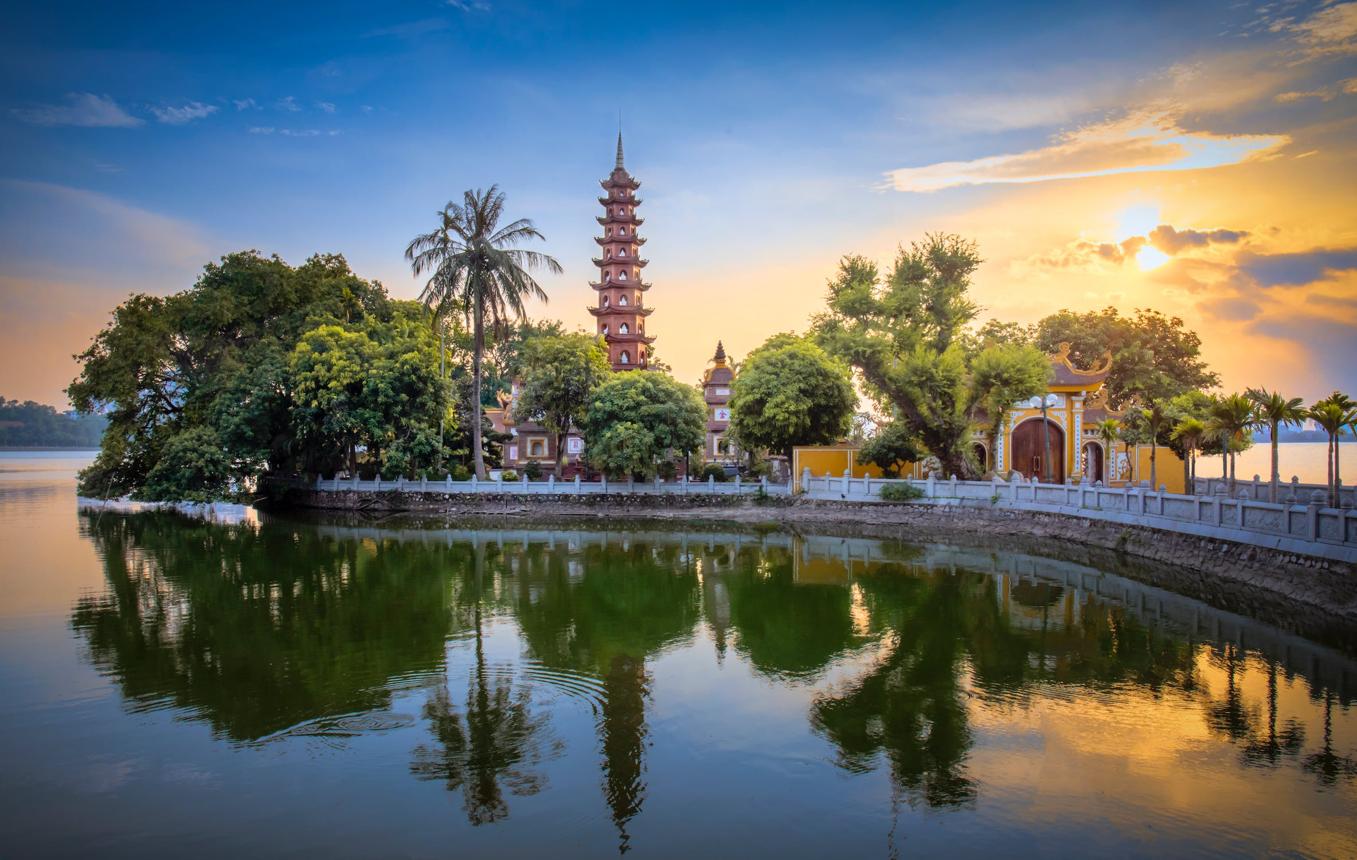
Another notable feature is its Bodhi tree. In Buddhist tradition, Siddhartha Gautama — who became the Buddha — is understood to have attained enlightenment beneath a Bodhi tree, and the tree here is associated with a cutting from the sacred Bodhi tree at Bodh Gaya in India. It's a reminder that the pagoda is connected to a much wider Buddhist history that extends far beyond Hanoi.
What to See and Experience at Trấn Quốc Pagoda
The complex isn't enormous, but don't treat it as a quick photo stop. Here are the experiences worth slowing down for:
- Walk through the temple grounds — take in the architecture, statues and smaller details, and give space to worshippers making offerings.
- Admire the Bảo Tháp tower — walk around and look for different angles rather than the same photograph everyone takes.
- Discover the Bodhi tree — a small detail that adds another layer of meaning to the visit.
- Experience the spiritual atmosphere — observe respectfully, keep your voice down and avoid interrupting anyone who is praying.
- Enjoy the views of West Lake — pause to appreciate the contrast between the peaceful temple grounds and the busy city beyond.
How to Get to Trấn Quốc Pagoda
- From Hanoi Old Quarter — Grab or a taxi is the easiest option; allow about 15 to 25 minutes towards Thanh Niên Street.
- By bicycle — a great option if you're staying around West Lake; follow the roads around the lake and approach along Thanh Niên Street.
- On foot — a good option if you're already exploring nearby attractions, but a longer walk from the Old Quarter.
Trấn Quốc Pagoda Visitor Information
| Visitor information | Details |
|---|---|
| Location | Thanh Niên Street, Tây Hồ, Hanoi |
| Admission | Free entry |
| Suggested visit | Around 30 to 60 minutes |
| Best time to visit | Early morning or late afternoon |
| Dress code | Respectful clothing covering shoulders and knees |
| Photography | Be respectful around worshippers and inside prayer areas |
| Getting there | Grab, taxi, bicycle or walking from nearby attractions |
Opening hours: published guides give different schedules, and hours may change for religious occasions — check current arrangements before setting off. Entrance fee: entry is generally free, though you may see optional donation boxes. How long: 30 to 60 minutes suits most visitors; allow longer for architecture, photography or history.
What Should You Wear to Trấn Quốc Pagoda?
Trấn Quốc Pagoda is an active Buddhist place of worship, so dress respectfully — a good rule is to cover your shoulders and knees.
- Trousers or longer shorts that cover the knees.
- Shirts or tops with sleeves.
- Dresses or skirts that reach the knees or below.
- Comfortable shoes for walking around the complex.
Avoid very short shorts, mini skirts and sleeveless tops, particularly if you intend to enter the worship buildings. Pack a light cover-up so you don't have to change your plans at the entrance.
Local Etiquette: Visiting a Vietnamese Buddhist Temple Respectfully
- Keep your voice down — especially inside the prayer halls.
- Dress respectfully — cover your shoulders and knees.
- Remove your shoes when requested — follow signs and staff instructions.
- Be careful with photography — avoid photographing people closely while they pray without permission.
- Don't touch religious objects — statues, offerings, altars and sacred objects.
- Respect people making offerings — give them room and don't interrupt ceremonies.
- Treat donations as optional — use designated boxes and don't feel pressured.
Best Time to Visit Trấn Quốc Pagoda
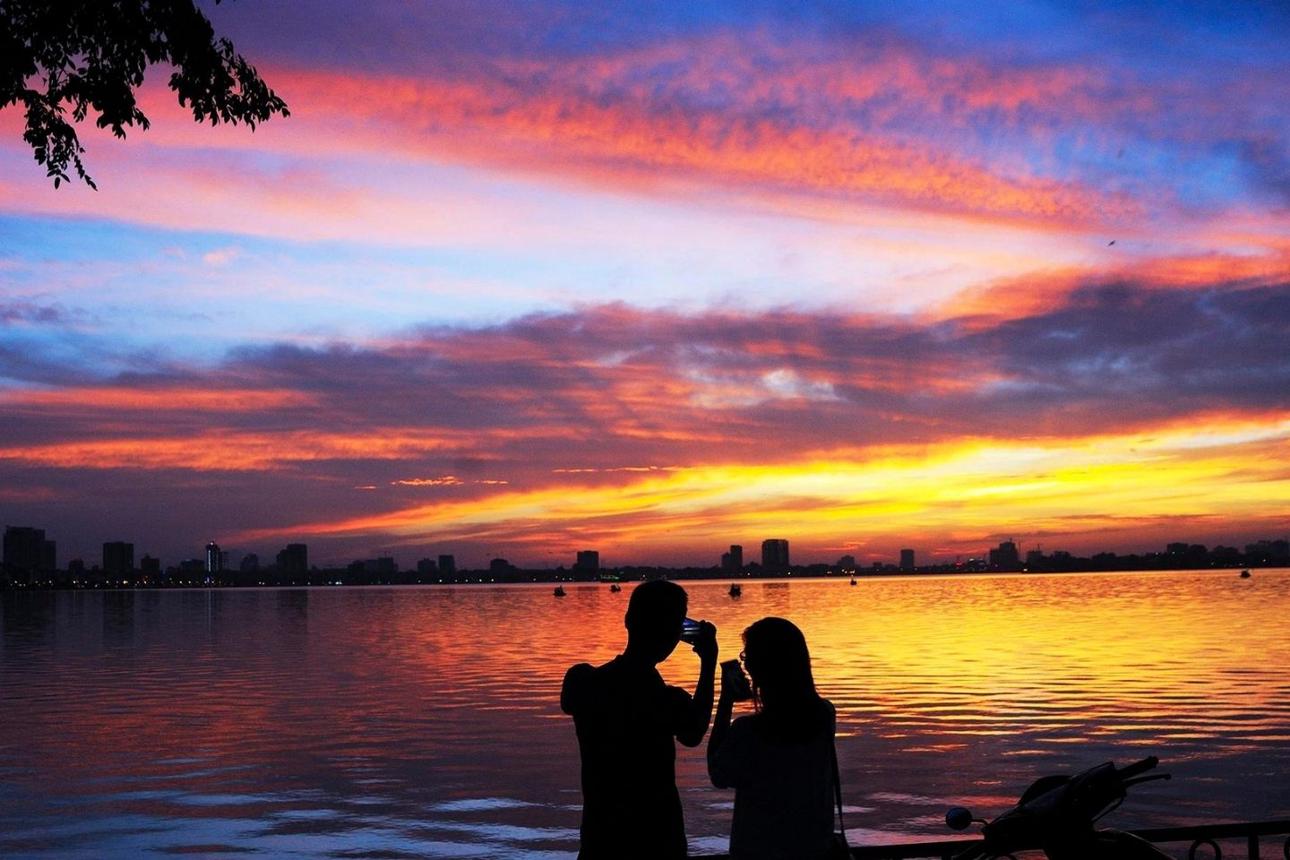
Early morning is peaceful and atmospheric — softer light, comfortable temperatures and fewer groups. Late afternoon brings beautiful light over West Lake, bringing out the warm tones of the red tower. After visiting, continue along Thanh Niên Street and find a place to enjoy the lake as the sun begins to set.
What Else Can You Visit Near Trấn Quốc Pagoda?
You're already in an area with plenty more to discover — combine several nearby places into one outing.
- Quán Thánh Temple — another important religious landmark near the southern end of West Lake, with a different architectural character.
- Thanh Niên Street — a scenic road between West Lake and Trúc Bạch Lake, lovely for a walk.
- West Lake — read our complete West Lake Hanoi guide →
- Cafés and restaurants around Tây Hồ — slow down after sightseeing with local food or international dining.
A Simple Half-Day Itinerary Around Trấn Quốc Pagoda
| Suggested time | Experience |
|---|---|
| 8:00 AM | Arrive at Trấn Quốc Pagoda and explore the grounds |
| 9:00 AM | Walk along Thanh Niên Street |
| 9:30 AM | Visit Quán Thánh Temple |
| 10:30 AM | Find a nearby café for Vietnamese coffee |
| 11:30 AM | Enjoy lunch around Tây Hồ |
Frequently Asked Questions About Trấn Quốc Pagoda
Is Trấn Quốc Pagoda worth visiting?
Yes — it's one of Hanoi's most historic Buddhist temples with a beautiful setting on West Lake. The combination of history, architecture, religious significance and lakeside scenery makes it a worthwhile stop.
How old is Trấn Quốc Pagoda?
Its history dates back to the sixth century, traditionally around 541 AD — approximately 1,500 years old. It was moved to its present location on West Lake in 1615.
Is Trấn Quốc Pagoda free to visit?
Yes, entry is generally free, although visitors may choose to make a voluntary donation.
What are the opening hours of Trấn Quốc Pagoda?
Opening-hour information varies between published sources and may change — check the current schedule before visiting, especially around midday or religious holidays.
What should I wear to Trấn Quốc Pagoda?
Wear respectful clothing covering your shoulders and knees, and avoid very short shorts, mini skirts and sleeveless tops.
How long do you need at Trấn Quốc Pagoda?
Around 30 to 60 minutes is enough for many visitors. Allow longer for architecture, photography or the surrounding area.
Can tourists visit Trấn Quốc Pagoda?
Yes — visitors of different backgrounds and religions can explore the pagoda, provided they respect its religious purpose and follow visitor guidelines.
What is Trấn Quốc Pagoda famous for?
Its long Buddhist history, its location on West Lake, its distinctive red Bảo Tháp tower and its importance as one of Hanoi's oldest pagodas.
Can you take photographs at Trấn Quốc Pagoda?
Photography is generally possible around the outdoor grounds and architectural features. Be considerate around people praying and follow any restrictions inside worship areas.
What attractions are near Trấn Quốc Pagoda?
Nearby highlights include West Lake, Thanh Niên Street and Quán Thánh Temple, plus the cafés and restaurants around Tây Hồ.
Make Trấn Quốc Pagoda Part of Your Hanoi Adventure
Some places are worth visiting because they're famous; others stay with you because of how they make you feel. Trấn Quốc Pagoda offers a little of both — the history stretching back almost 1,500 years, the red tower above the trees, the peaceful courtyards and the beautiful setting beside West Lake.
And the best part is what you can do after — walk along the lake, discover a café tucked away in Tây Hồ, try something new for lunch, and watch the sun disappear over the water. Give yourself time to experience this side of Hanoi.
Make Tây Hồ your base for exploring Hanoi
After a day discovering temples, lakeside cafés and hidden corners of the neighbourhood, it's nice to have somewhere comfortable to return to. At Tuna Homestay, you can unwind after exploring, recharge for the next day and meet fellow travellers with stories of their own.
Best rates when you book direct on our website.