
Somewhere behind Hanoi's restless streets, there is a place where time seems to have taken a different path.
The motorbikes disappear. The noise softens. Ancient wooden gates open onto courtyards shaded by old trees, where stone turtles guard the names of scholars who lived centuries ago.
This is the Temple of Literature.
Built in 1070, it has watched generations come and go. Young scholars once walked these paths carrying books, ambition and the hope of passing the demanding royal examinations. Those who succeeded could earn something extraordinary: a place in the history of their country, their names carved into stone for generations to remember.
And here's something worth looking for when you visit.
Even today, students come here before important examinations, hoping for a little luck and success. The centuries have passed, but the hopes carried through these gates haven't changed as much as you might think.
Come with a little curiosity. There are stories waiting in every courtyard.
A Place Built for Knowledge, Honour and Ambition
The Temple of Literature was founded in 1070 under Emperor Lý Thánh Tông, dedicated to Confucius and the teachings of Confucianism.
In 1076, the Imperial Academy was established here. It became Vietnam's first national university, educating students who hoped to pass the royal examinations and serve in the imperial court.
But imagine what that meant at the time.
There were no classrooms filled with computers, no printed exam guides and no quick route to success. Students devoted years to studying classical texts, philosophy and the principles of Confucian thought.
Passing an examination could transform a person's future and bring honour to their family.
The temple became a symbol of that pursuit. Its courtyards, halls and stone inscriptions still preserve traces of the people who came here searching for knowledge and recognition.
Today, you can follow much of that journey yourself.
Five Courtyards, Five Chapters of History
The complex unfolds through a series of courtyards and gates. Don't rush straight towards the main temple. The beauty is in discovering how each part leads to the next.
1. Pass Through the Great Gate
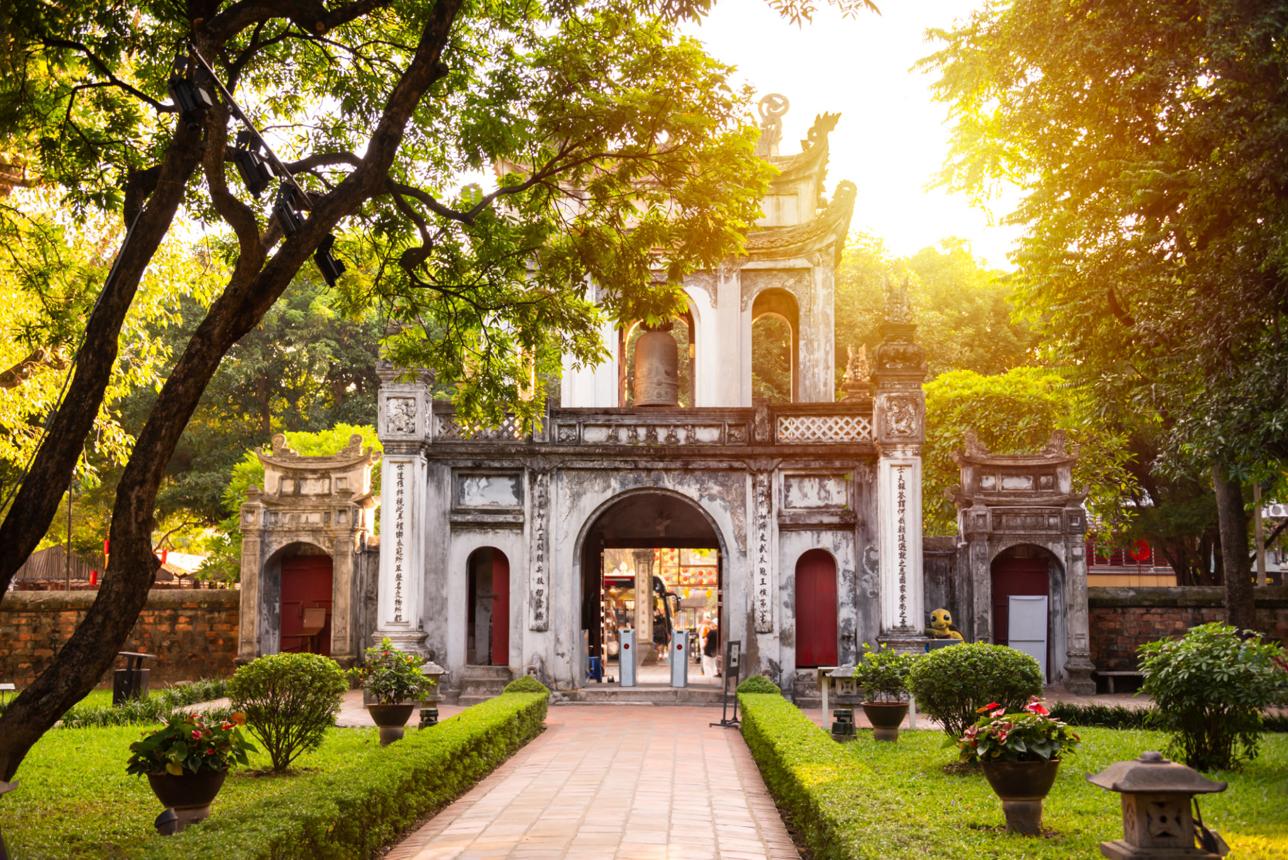
Your journey begins at the Great Gate.
Look at the traditional roof, the wooden details and the old walls framing the entrance. Beyond it lies a quieter world, separated from the movement of modern Hanoi.
Walk through slowly.
The temple was designed around a sequence of courtyards, each with its own character. The path draws you deeper into the complex, revealing its architecture gradually rather than all at once.
It's a lovely way to begin exploring a place whose history stretches back nearly a thousand years.
Look for: The traditional architectural details around the entrance and the transition from the busy street into the peaceful grounds.
2. Find Khue Van Cac, the Pavilion of Constellation
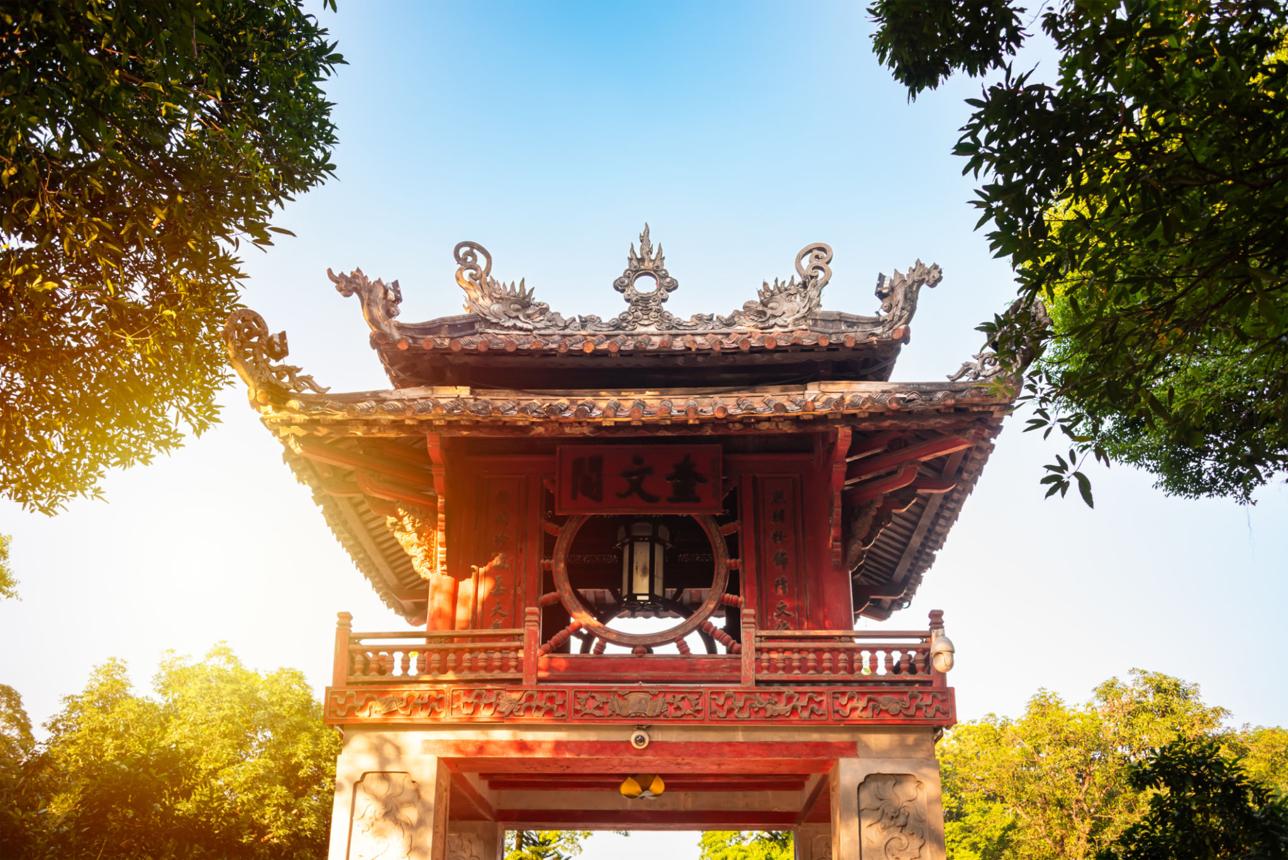
Then comes one of the temple's most recognisable sights.
Khue Van Cac, the Pavilion of Constellation, rises above the courtyard with its red wooden structure, elegant roof and distinctive circular window.
It was built in 1805 and has become one of Hanoi's most familiar cultural symbols.
But don't just take the photograph and move on.
Look at the proportions, the wooden supports and the way the pavilion stands above the surrounding courtyard. Its name connects it to the constellation of literature, reflecting the importance of learning and scholarship within the temple.
For generations, knowledge was something to be respected, pursued and celebrated. This little pavilion is a beautiful expression of that idea.
Look for: The circular window and the red wooden details. They're part of what makes this building so distinctive.
3. Meet the Turtles Who Guard the Scholars' Names
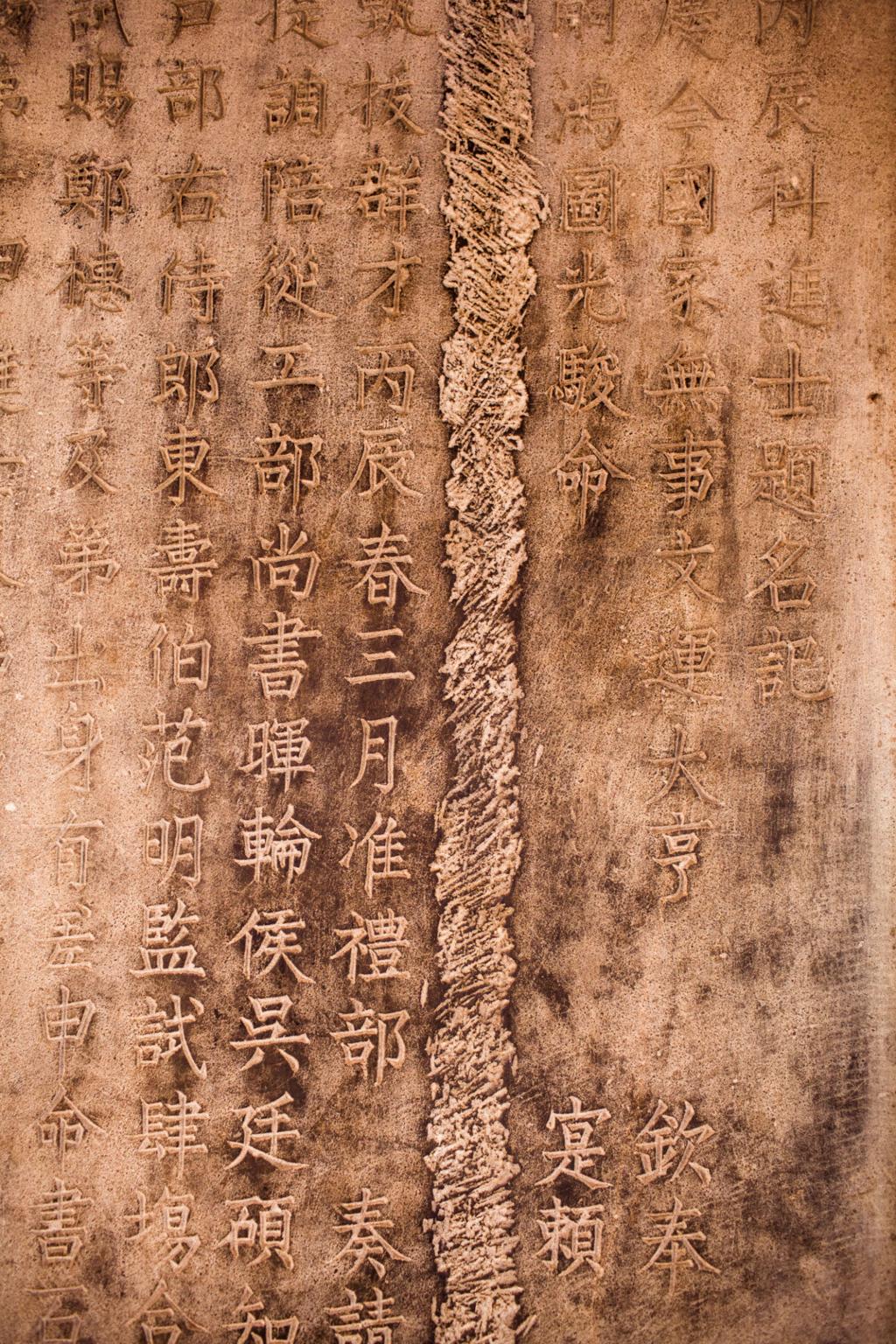
This is one of the most fascinating corners of the entire complex.
Rows of stone tablets stand on the backs of carved turtles. These are the Stelae of Doctors, recording the names of successful candidates from the royal examinations.
Pause for a moment and consider what you're looking at.
Each name represents years of study, determination and a moment of extraordinary achievement. These scholars earned their place in the historical record, and their names were carved into stone so their success would not disappear with time.
The turtle is traditionally associated with longevity and wisdom, making it a fitting guardian for these records.
Look closely at the inscriptions. Imagine the students whose futures depended on the examinations, and the families who would have celebrated their success.
There's something quietly moving about seeing their names still here, centuries later.
A little visitor etiquette: Admire the turtles and inscriptions up close, but don't touch, climb on or damage the historic monuments. They have survived for generations. Let's keep them that way.
4. Enter the Main Temple and Discover Its Sacred Atmosphere
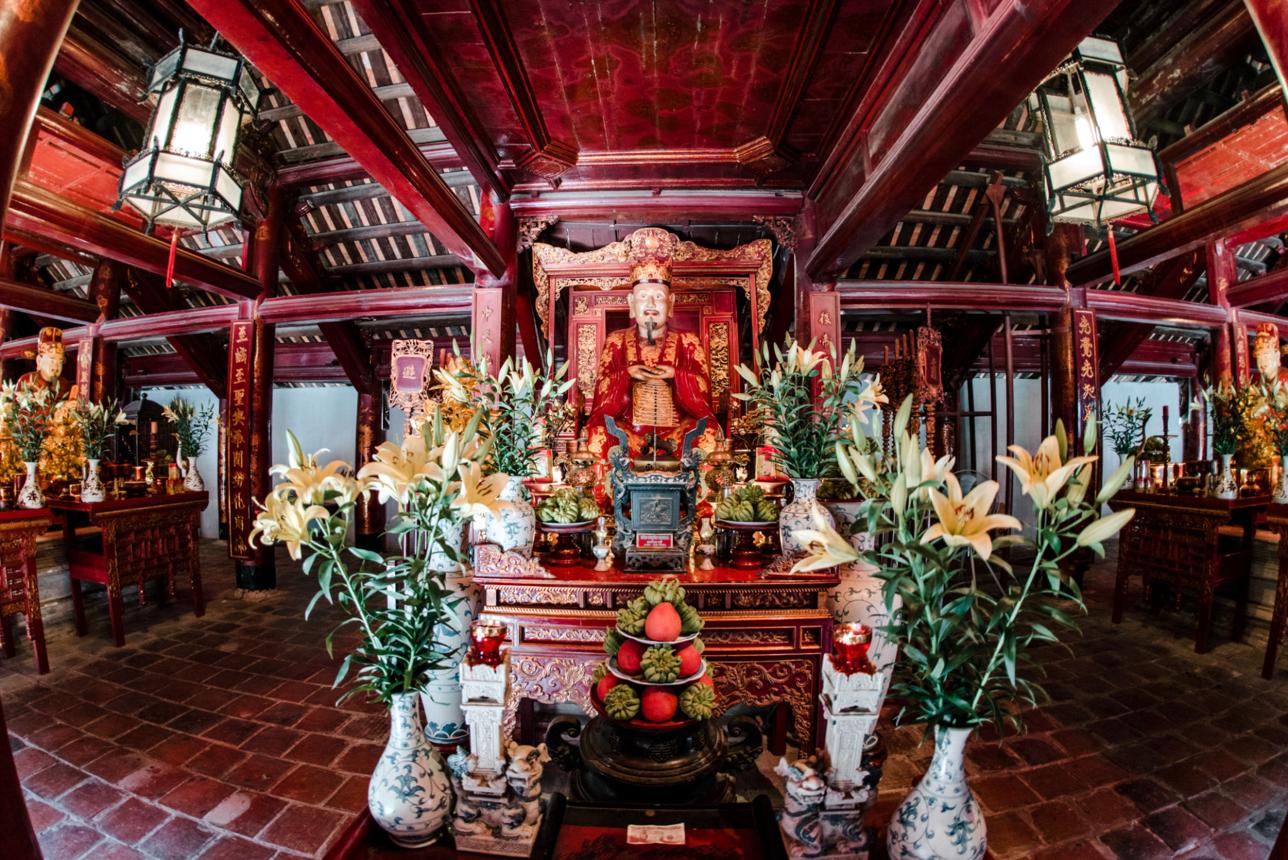
Continue towards the main temple, where the atmosphere becomes more ceremonial.
The wooden structures, traditional decorations and altars create a setting that feels a world away from Hanoi's modern streets.
This area is dedicated to Confucius and his disciples. It reflects the philosophical traditions that influenced Vietnamese education, scholarship and ideas about respect for teachers.
Take your time looking at the details.
The architecture isn't trying to overwhelm you. Its beauty is in the craftsmanship, the symmetry and the quiet atmosphere.
This is a place to slow down and reflect on the ideas that shaped the institution: learning, discipline, respect and the pursuit of wisdom.
5. Wander Through the Final Courtyards
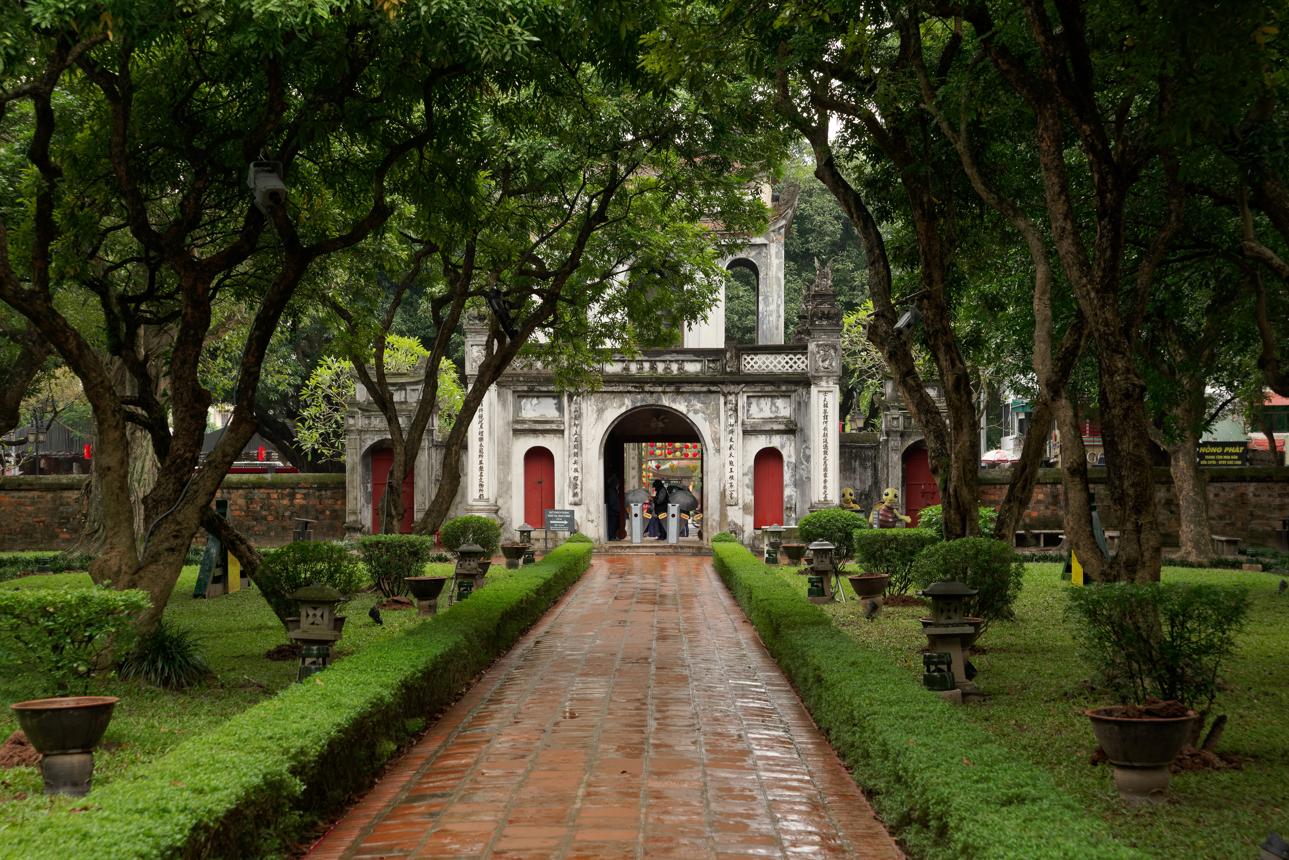
Don't leave as soon as you've seen the main temple.
Explore the remaining courtyards, look into the exhibition spaces and notice the smaller details tucked around the grounds.
You may find displays explaining the history of the Imperial Academy, traditional cultural activities and calligraphy artists creating personalised scrolls.
The scrolls make an interesting souvenir. Browse the examples, choose a design and ask the artist for the price before they begin. Visitors have reported paying around 200,000 VND, although this isn't a fixed or verified price.
And take a moment to enjoy the gardens.
Sometimes the most memorable part of an old place isn't its grandest building. It's a quiet corner where you can stand still, look around and imagine the lives that once moved through it.
Why Students Still Come Here Today

There's a beautiful connection between the students who walked these courtyards centuries ago and the young people who visit today.
The Imperial Academy is no longer teaching classes here, but the temple remains closely associated with learning and academic achievement.
Before important examinations, students visit to pray for good luck and success. Families come to celebrate achievements. Some students seek blessings for the next stage of their education.
You may see young people wearing traditional clothing, taking photographs and paying their respects.
Look around and think about the connection.
The old scholars came here with dreams of a better future. Today's students arrive with their own ambitions.
Different generations. Different examinations. Much the same hope.
Tips for Visiting the Temple of Literature
A little planning will help you enjoy the place without rushing through its history.
- Arrive before 10 AM. The courtyards are generally quieter earlier in the day, and the softer light makes the traditional buildings and gardens particularly beautiful for photographs.
- Dress respectfully. This is an important cultural and spiritual site. Choose modest, comfortable clothing, especially if you plan to enter the temple buildings.
- Bring some cash. Visitors have reported that admission payment is cash-only. Confirm current payment arrangements before your visit, as these can change.
- Allow around 90 minutes. That's a comfortable amount of time to explore the courtyards, see the main buildings, admire the stelae and take photographs.
- Bring water. You'll be walking around the grounds, and Hanoi's heat can be unforgiving. An early visit helps you avoid the worst of the midday sun.
- Don't rush the history. Understanding the connection to Confucius, the Imperial Academy and the royal examinations makes the experience much richer.
- Ask before ordering calligraphy. If you want a personalised scroll, agree on the price before the artist starts.
Toilets and a small shop are also available within the complex.
Is the Temple of Literature Worth Visiting?
If you enjoy discovering the stories behind a place, absolutely.
You can visit for the architecture, the gardens and the beautiful photographs. But what makes this place special is the history hiding behind those details.
The turtle statues aren't simply decorations. The inscriptions aren't just old writing. The courtyards aren't just pretty spaces.
Each one connects you to a world of scholars, teachers, royal examinations and families who believed education could change a person's future.
And when you see students still visiting to pray for success, the history suddenly feels much closer.
Where Is the Temple of Literature in Hanoi?
The Temple of Literature is located at:
58 Quốc Tử Giám Street, Đống Đa District, Hanoi.
It's west of the Old Quarter and can be combined with nearby attractions such as the Vietnam National Museum of Fine Arts and the Ho Chi Minh Mausoleum complex.
It's easy to arrange as part of a half-day exploring Hanoi's history and culture.
Let Hanoi Reveal Its Stories
The Temple of Literature is a reminder that Hanoi is much older and more layered than the busy streets might first suggest.
Behind its gates are stories of ambition, knowledge and generations who came searching for a better future.
But this is only one chapter.
There are ancient temples tucked between neighbourhood streets, quiet lakeside corners, traditional markets and places where the city's past still meets everyday life.
At Tuna Homestay in Tây Hồ, you're close to West Lake and a more relaxed side of Hanoi. Spend your days following the city's stories, then return somewhere welcoming to rest, share what you've discovered and plan your next adventure.
Come curious. Hanoi has been waiting a long time to tell you its stories.
FAQs About the Temple of Literature Hanoi
What is the Temple of Literature famous for?
It's famous as a historic temple dedicated to Confucius and the home of the Imperial Academy, widely recognised as Vietnam's first national university. Its ancient courtyards, traditional architecture and turtle-backed stone stelae make it one of Hanoi's most important cultural landmarks.
How old is the Temple of Literature?
It was founded in 1070, making it nearly 1,000 years old.
How long should I spend at the Temple of Literature?
Allow around 90 minutes to explore the courtyards, see the main temple buildings, admire the stone stelae and take photographs.
Why are there turtles at the Temple of Literature?
The stone stelae recording successful royal examination candidates rest on carved turtle statues. The turtle traditionally symbolises longevity and wisdom.
Can you touch the turtle statues?
Visitors should not touch or climb on the historic turtle statues. You can admire the inscriptions and take close-up photographs without damaging the monuments.
Why do students pray at the Temple of Literature?
The temple has a long association with education and academic achievement. Students still visit to pray for good luck before examinations and celebrate important academic milestones.
What should I wear to the Temple of Literature?
Wear comfortable, modest clothing. As a cultural and spiritual site, it's best to avoid very short clothing and dress respectfully, particularly when entering the temple buildings.