
Just imagine a small wooden temple rising out of a pond, balanced on a single stone pillar. Its curved roof spreads above the water like a lotus flower reaching towards the sunlight. It looks almost too delicate to be standing there.
Yet this unusual little structure has been part of Hanoi's story for nearly a thousand years. Behind its distinctive design is an emperor's dream, a Buddhist legend and a history that has survived wars, destruction and reconstruction. Welcome to One Pillar Pagoda (Chùa Một Cột), one of Hanoi's most recognisable historical and religious landmarks.
Where Is One Pillar Pagoda in Hanoi?
One Pillar Pagoda is located in the Ba Đình District of Hanoi, close to the Ho Chi Minh Mausoleum and Ho Chi Minh Museum. You'll find it on Chùa Một Cột Street, within the historical and cultural area surrounding Ba Đình Square — an easy place to combine with several other important Hanoi attractions.
Nearby attractions:
- Ho Chi Minh Mausoleum
- Ho Chi Minh Museum
- Presidential Palace
- Imperial Citadel of Thăng Long
The History of One Pillar Pagoda
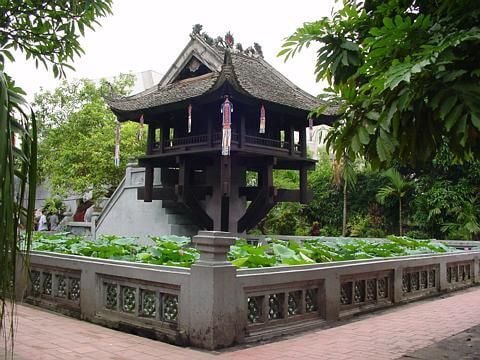
One Pillar Pagoda dates back to 1049, during the reign of Emperor Lý Thái Tông of the Lý Dynasty — almost a thousand years of history packed into a structure you can walk around in just a few minutes.
The pagoda was originally part of a larger Buddhist complex known as Diên Hựu Pagoda, often translated as the Pagoda of Lasting Blessings. The original structure was expanded during the Lý Dynasty and repaired by later rulers. Then, in 1954, as French forces withdrew from Hanoi, the original pagoda was destroyed by explosives — the following year it was reconstructed using the earlier architectural design. The structure standing today is therefore a reconstruction, not the untouched building from 1049, but it remains an important symbol of the city's heritage, recognised as a National Historic and Architectural Relic in 1962.
The Legend Behind One Pillar Pagoda
There's a reason this pagoda looks like a lotus flower rising from a pond. According to Vietnamese legend, Emperor Lý Thái Tông had no son and desperately wished for an heir. One night he dreamed that the Bodhisattva of Compassion — commonly known in Vietnam as Quan Âm — appeared to him seated on a lotus flower and offered him a baby boy.
Not long afterwards, the emperor's wife gave birth to a son. Grateful for what he believed was divine intervention, he ordered a pagoda built in honour of the experience, inspired by the lotus throne from his dream: a small temple raised above a pond, supported by a single stone pillar. The structure became known as Liên Hoa Đài (Lotus Tower), while the wider complex was called Diên Hựu.
The lotus is an important symbol in Buddhism — it grows from muddy water yet rises above the surface with its petals clean and beautiful, representing purity, enlightenment and the possibility of rising above worldly difficulties.
One Pillar Pagoda Architecture: Why Does It Look Like a Lotus?
The first thing you'll notice is how different the structure looks from a conventional temple. Instead of a large building on a wide foundation, the main wooden shrine stands above a square pond, supported by a single stone pillar. The design is simple, but the symbolism is powerful.
- The single stone pillar — the defining feature, representing the lotus stem supporting the wooden shrine above.
- The wooden shrine — a compact structure with a traditional curved roof, forming the flower.
- The lotus pond — the square pond beneath completes the design; its reflection of the roof and pillar gives a better sense of the lotus-inspired architecture.
What to See and Experience at One Pillar Pagoda
One Pillar Pagoda is relatively small, so don't arrive expecting a huge complex — its appeal is in the details:
- Admire the pagoda from the pond — walk around and see the single pillar, shrine and curved roof together.
- Look closely at the traditional architecture — the roof, wooden details and decorative features.
- Observe the religious atmosphere — people still come to pray, light incense and leave offerings; speak softly and move respectfully.
- Explore the surrounding grounds — appreciate how the pagoda fits into the wider historical complex.
One Pillar Pagoda Entrance Fee and Opening Hours
Entrance fee: admission information varies — some sources report free entry, while others list a ticket price of 25,000 VND for international visitors (Vietnamese visitors free). Check the current arrangements at the entrance rather than relying on an outdated online price. Nearby attractions such as the Ho Chi Minh Museum may have separate fees.
Opening hours: published schedules include morning visiting sessions, with some sources reporting additional afternoon access on selected days. Check the latest information before setting off, especially around public holidays or official events in the Ba Đình area.
What to Wear and Temple Etiquette
- Wear clothing that covers your shoulders and knees.
- Keep your voice low around the shrine.
- Remove your shoes if required before entering the worship area.
- Avoid touching religious objects or offerings.
- Don't photograph worshippers without their permission.
- Follow any signs or instructions from the site staff.
How to Get to One Pillar Pagoda
- From the Old Quarter — a taxi or ride-hailing service is simplest; you can also walk towards Ba Đình and explore the historical attractions along the way.
- By taxi or Grab — enter One Pillar Pagoda or Chùa Một Cột as your destination.
- By public transport — several local bus routes serve the Ba Đình area; check current routes and stops.
Places to Visit Near One Pillar Pagoda
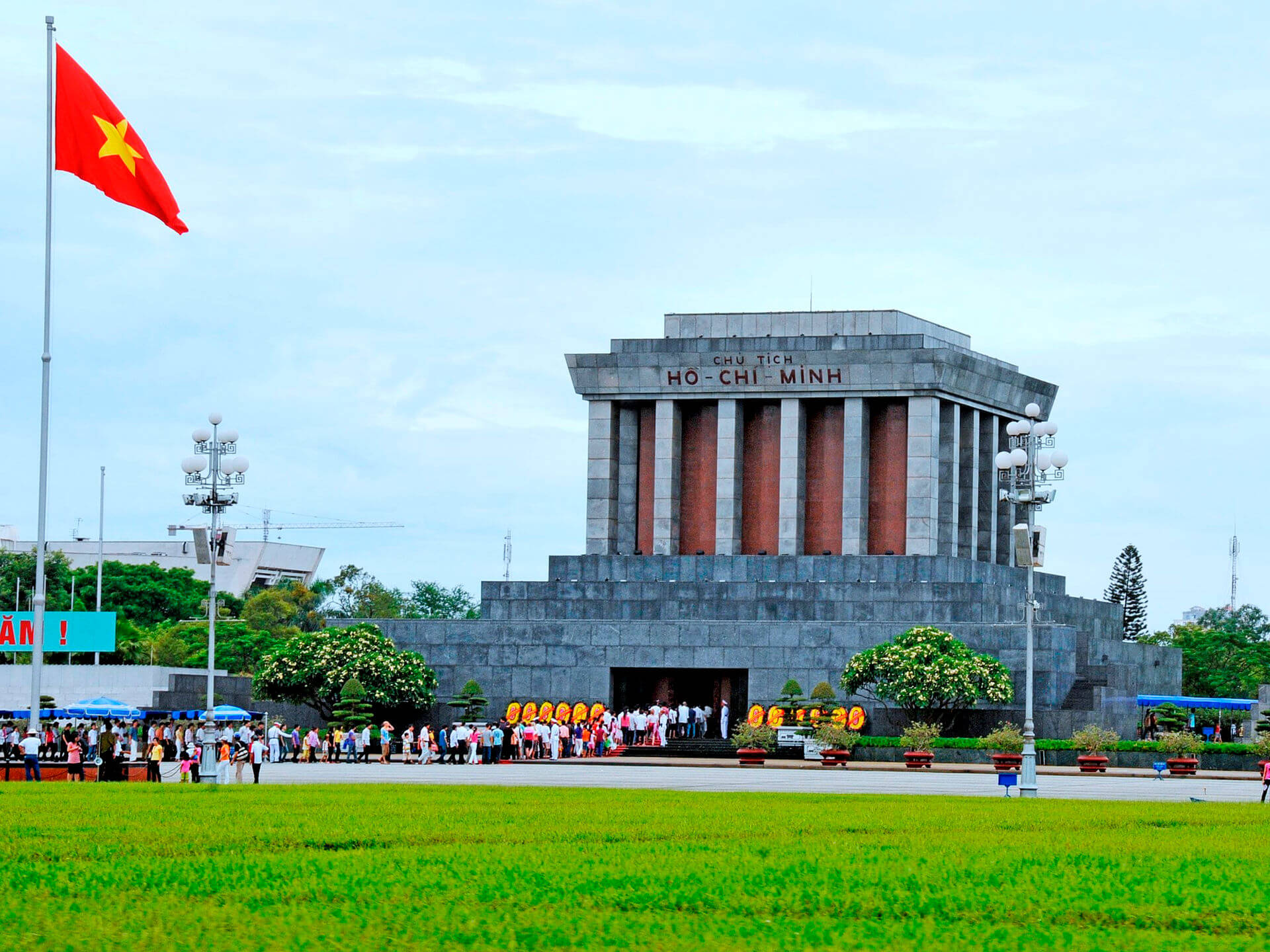
- Ho Chi Minh Mausoleum — one of Vietnam's most important landmarks; check visiting schedules and visitor rules.
- Ho Chi Minh Museum — exhibitions on Hồ Chí Minh's life and Vietnam's modern history.
- Presidential Palace — a striking French colonial building with a very different character.
- Imperial Citadel of Thăng Long — a UNESCO World Heritage Site preserving the remains of an important political and cultural centre.
Frequently Asked Questions About One Pillar Pagoda
Why is One Pillar Pagoda famous?
It's famous for its unusual architecture — a small wooden shrine standing on a single stone pillar above a square pond, creating the appearance of a lotus flower rising from the water.
How old is One Pillar Pagoda?
It was originally built in 1049 during the reign of Emperor Lý Thái Tông. The present structure was reconstructed in 1955 after the original was destroyed in 1954.
Who built One Pillar Pagoda?
According to historical tradition, Emperor Lý Thái Tông ordered its construction in 1049, inspired by a dream involving the Bodhisattva of Compassion.
What does One Pillar Pagoda represent?
Its design represents a lotus flower rising from the water — in Buddhist symbolism, the lotus stands for purity, enlightenment and spiritual growth.
Is One Pillar Pagoda free to visit?
Published information differs. Some sources report free entry, while others list a 25,000 VND ticket for international visitors. Check the current price at the entrance.
How long should you spend at One Pillar Pagoda?
Most visitors can explore the pagoda in around 15 to 30 minutes. Allow extra time for photography or combining with nearby attractions.
What is the best time to visit One Pillar Pagoda?
Early morning is a good choice for a quieter experience and more comfortable temperatures.
Is One Pillar Pagoda worth visiting?
Yes, particularly if you're interested in Hanoi's history, Buddhist architecture and cultural landmarks. It's a short stop, but its unusual design and nearly thousand-year history make it worth seeing.
Make Tuna Homestay your base for exploring Hanoi
Hanoi is a city that rewards curiosity. One morning you're standing beside a thousand-year-old pagoda; a few hours later you're wandering busy streets, discovering tiny cafés and watching the city change colour as the sun drops. After a full day, it's nice to have somewhere welcoming to come back to — at Tuna Homestay you'll find a relaxed atmosphere in Tây Hồ, close to West Lake and away from the busiest parts of central Hanoi.
Best rates when you book direct on our website.